Search for Flights
 Search for Hotels
 Check Exchange Rates
 Check the Weather
Himeji to Tottori Itinerary: Hidden Castle Towns, Hot Springs & Yokai Street
Last update
Many travelers don’t realize how different Japan feels between the Pacific side and the Sea of Japan side.
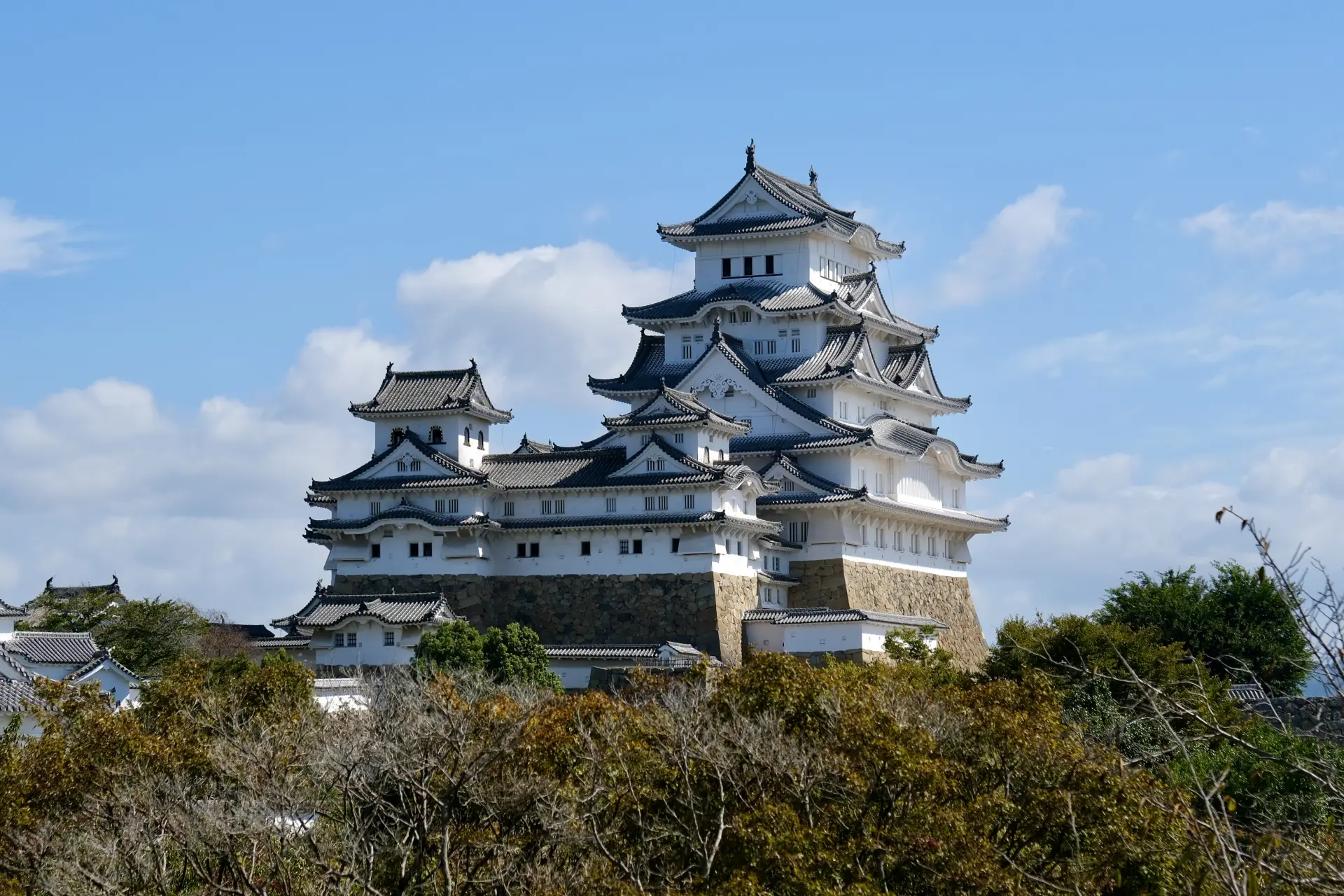
On the Pacific side, you find bustling cities and bright landmarks like Himeji’s White Heron Castle. But as you cross the mountains into Tottori, the air cools, the pace slows, and folklore takes center stage in towns like Kurayoshi and Sakaiminato.
This two-day Himeji to Tottori travel route showcases Japan’s hidden castle towns, tracing their evolution from historic samurai centers to cultural destinations filled with traditional crafts, folklore, and local life.
Day 1 – From the White Heron Castle to Kurayoshi’s Red-Tiled Streets
Himeji Castle: The White Heron That Never Fell(Himeji City, Hyogo Prefecture)
Standing over Himeji City like a white bird about to take flight, Himeji Castle is Japan’s most perfectly preserved fortress. Completed in 1609 under Ikeda Terumasa, a feudal lord (daimyo) allied with the Tokugawa shogunate, the castle stands as a masterpiece of Edo-period architecture and military design.

Now recognized as a UNESCO World Heritage Site, Himeji Castle is one of the few original castles in Japan to have survived since its construction without suffering major damage from war.
Its white plaster walls appear luminous in sunlight, yet what’s most fascinating lies inside: a labyrinth of corridors and gates purposely designed to confuse intruders.

If you look closely at the roof tiles, you’ll spot the kamon (family crests) of the lords who once ruled here. Among them is the butterfly crest (chō-mon) of the Ikeda clan, whose delicate emblem still flutters across the castle’s architecture.

Though Himeji Castle never faced a full-scale battle, it was built to withstand one: arrow slits, stone drop-holes, and fortified towers reveal its strategic brilliance beneath the beauty.

Climbing the six-story tenshukaku (main keep), the panorama unfolds—the Inland Sea glimmering to the south, the mountains of Harima Province to the north.
Super Hakuto Express: Through Mountains and Stories(Himeji City, Hyogo Prefecture – Kurayoshi City, Tottori Prefecture)
After exploring Himeji Castle, it’s hard not to look back—the white towers rising like a heron’s wings above the city. Yet this Himeji to Kurayoshi itinerary offers a different kind of beauty beyond the castle walls.
From Himeji Station, the Super Hakuto Limited Express begins its two-hour journey north toward Kurayoshi and the Sea of Japan coast.

Kurayoshi: The White-Walled Town of Tottori(Kurayoshi City, Tottori Prefecture)
The city of Kurayoshi in Tottori Prefecture is one of western Japan’s best-preserved historical towns, known for its white-walled storehouses (shirakabe dozogun) and red-tiled roofs that line narrow waterways once used by Edo-period merchants.

Originally developed as a castle and merchant town under the Tottori branch of the Ikeda clan—the same powerful family that built Himeji Castle—Kurayoshi was spared from the major fires and wartime destruction that affected many other Japanese cities.

As a result, visitors can explore sake breweries and textile workshops that continue to operate within these historical buildings, offering an authentic glimpse into Tottori’s cultural heritage.
Kurayoshi Kasuri: The Weaving Tradition of Tottori(Kurayoshi City, Tottori Prefecture)
At the Kurayoshi Furusato Craft Center, artisans continue the craft of Kurayoshi Kasuri, a traditional ikat-style textile recognized for its soft indigo tones and delicate geometric patterns.

Once woven for everyday kimono and workwear, Kurayoshi Kasuri flourished during the Edo period, supported by the town’s prosperity as a merchant and castle town.
The secret to its quality lies in Kurayoshi’s pure mountain water, ideal for dyeing natural indigo. Combined with locally grown cotton and a mild inland climate, these conditions made the area one of Tottori’s leading textile hubs.

Here, you can try the weaving process themselves, learning how threads are dyed, tied, and aligned to create traditional Kasuri patterns.

The small on-site shop also sells beautiful handmade souvenirs woven with the same care and technique passed down for centuries.
Hakota Doll Workshop(Kurayoshi City, Tottori Prefecture)
Just a short walk from the Kurayoshi Furusato Craft Center, the town’s spirit of handmade artistry continues at the Hakota Doll Workshop.

Inside the small workshop, a master craftsman invites visitors to sit and paint their own wooden dolls, using smooth local wood sourced from the surrounding Tottori mountains.


“People usually make dolls that look like themselves,” he says with a laugh—and when you finish and look closely, he’s right. The doll’s expression somehow mirrors your own mood and personality.
Kaike Onsen: Seaside Hot Springs of Tottori’s Yonago City(Yonago City, Tottori Prefecture)
After a day surrounded by Kurayoshi’s craftsmanship and calm streets, the journey continues north toward the coast—to Kaike Onsen in Yonago City, Tottori Prefecture. Facing the Sea of Japan, this seaside hot spring resort is known for its mineral-rich water, which leaves the skin soft and refreshed.

Many of the ryokan (traditional inns) here, including the elegant Kaike Fuga, offer tatami rooms, serene wooden interiors, and open-air baths. Guests can relax in the soothing water, enjoy local seafood cuisine before continuing toward Yonago Castle Ruins and Sakaiminato the next day.
Day 2 – From Castle Ruins to the Town of Yokai
Yonago Castle Ruins: The Best Panoramic Viewpoint in Tottori Prefecture(Yonago City, Tottori Prefecture)
After a peaceful night at Kaike Onsen, Day 2 of this Himeji-to-Tottori itinerary begins in Yonago City, one of the main gateways to western Tottori Prefecture.
Less than 20 minutes by car from the hot spring town, the Yonago Castle Ruins rise above the city center, offering one of the best panoramic viewpoints on the Sea of Japan coast. From here you can see Mount Daisen, Lake Nakaumi, and the entire shoreline that connects Yonago to Sakaiminato.

Originally built in the late 16th century by Kikkawa Hiroie, a retainer of the powerful Mori clan, Yonago Castle was designed to control maritime routes and defend the San’in coastline.

After the Meiji Restoration in 1873, Japan’s feudal castles were ordered dismantled, and Yonago’s wooden keep was torn down, leaving only its massive stone foundations.

Today, those stones remain perfectly intact, and climbing them rewards visitors with breathtaking views over both the city and the Sea of Japan—making it one of the most scenic historical sites in Tottori Prefecture.
Okamoto Issenya: Nostalgic Sweet Shop of Yonago Castle Town(Yonago City, Tottori Prefecture)
Descending from the castle hill into Yonago’s old merchant district, you’ll find Okamoto Issenya —a beloved dagashi (traditional candy) shop that has been part of the community since the late 19th century.

The shop’s wooden storefront, faded signs, and glass jars filled with colorful sweets instantly transport visitors back in time.

Inside, the friendly owner still greets guests, and even today the shop is lively with local kids coming in with their parents, just as they have for generations.
Lunch at Mine : The Flavor of the Sea(Sakaiminato City, Tottori Prefecture)
After savoring a bit of nostalgia at Okamoto Issenya, it’s time to continue west toward Sakaiminato, following a scenic 30-minute drive along the Sea of Japan coast.

Stop for lunch at Seafood Restaurant Mine, a long-beloved local restaurant located near Sakaiminato Port. The menu changes with the season, featuring fish and shellfish caught that very morning from the Sea of Japan.

Signature dishes include sashimi platters, grilled seafood, and miso soup made with local clams, offering a true taste of Tottori’s coastal cuisine.
Japan’s Yokai Street and the World of GeGeGe no Kitaro(Sakaiminato City, Tottori Prefecture)
Crossing from Yonago into Sakaiminato, the atmosphere transforms once again. This quiet port town in Tottori Prefecture is the hometown of Mizuki Shigeru, the legendary manga artist who brought Japan’s ancient folklore to life through his beloved series GeGeGe no Kitaro.

Along the 800-meter Mizuki Shigeru Road, over 178 bronze statues of character and yokai—Japan’s spiritual monsters line the streets in every imaginable pose.

Each bronze statue is crafted with incredible detail, connecting them to yokai legends once told across Japan. Even the streetlamps are decorated with yokai silhouettes.

Local shops sell everything from GeGeGe no Kitaro-shaped sweets and coffee blends, and the air is filled with playful music from GeGeGe no Kitaro.

Yokai Workshop & Yokai Future Post(Sakaiminato City, Tottori Prefecture)
On Mizuki Shigeru Road, the Yokai Workshop (“Tezukuri Yokai Kobo”) offers more than postcards. Here, you can choose from charming designs of Nezumiotoko, Medamaoyaji, or Kitaro, then color or decorate your own postcard before writing a message.

At the counter, your card receives a special Sakaiminato-only yokai postmark before being mailed—a small souvenir that can only be sent from this town.

Inside the shop stands the whimsical Yokai Future Post, a mailbox said to deliver letters to your future self—five years later, around Obon, Japan’s midsummer festival when spirits return to visit the living.
Some travelers write dreams they hope to achieve, others send words of encouragement to their future selves. And what message would you send to your own future self, five years from now?
Between Two Worlds: From Himeji to Tottori
Traveling from Himeji to Tottori feels like crossing between two versions of Japan.
In Himeji, the striking white walls of Himeji Castle, a UNESCO World Heritage Site, showcase Japan’s finest castle craftsmanship.

Heading north toward the Sea of Japan, travelers encounter the historic towns of Kurayoshi, Yonago, and Sakaiminato, where Edo-period streets, castle ruins, and folklore culture reveal the quieter side of Tottori Prefecture.

And if this kind of travel speaks to you, look for more routes in the Kansai Castle series, where each journey reveals another side of Japan’s enduring heart.
Check also...
Discover Kansai & Shikoku in 3 Days: From Osaka Castle to Tokushima’s Awa Odori Dance
From Himeji to the Castle in the Sky: Exploring Kansai’s Hidden Castle Towns
4 Magnificent West Japan Views That Won a Photo Contest
3 Memorable Scenic Spots in Kansai for Enjoying the Waterfront
A 3-Day Journey Along the Path of History and Culture: Outlining the Saigoku Kaidō from Osaka
Tottori: A Journey to Unwind in the Majesty of Nature at San’in Kaigan Geopark
Hyogo: A Journey in Search of Japan’s Finest Sake